Hierarchy of Right-of-Way Rules at an Intersection in Switzerland
Mis à jour le 13 mars 2026
When you approach an intersection, several elements may indicate who has the right of way: a traffic officer, traffic lights, road signs, or simply the general traffic rules.
To avoid confusion and ensure road safety, traffic rules follow a clear hierarchy of instructions.
When multiple types of signals are present at the same time, you must always follow the one with the highest priority.
Order of priority
The official order is the following:
- Instructions from a traffic officer
- Traffic lights
- Road signs
- Road markings
- Right-before-left rule
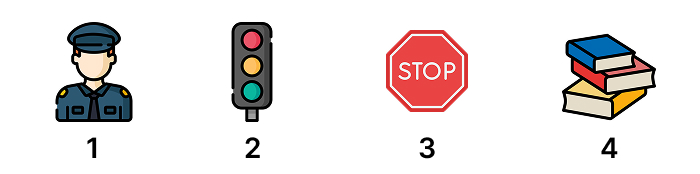
Understanding this hierarchy helps drivers quickly determine who has priority in most traffic situations, which is particularly important for the theoretical driving test.
For more information about right-of-way rules, you can consult the explanations from the
BPA – Swiss Council for Accident Prevention.
1. Traffic officers
A traffic officer is an authorized person who directs traffic, such as:
- a police officer
- a traffic controller
- a person managing traffic during roadworks or events
When a traffic officer is present at an intersection, their instructions override all other signals, including:
- traffic lights
- road signs
- road markings
If a traffic officer is directing traffic, you must only follow their instructions, even if they contradict traffic lights or signs.
Position of the officer
The position of the officer’s body indicates whether you may proceed or must stop.
Facing you or with their back toward you
If you see the officer’s front or back, you must stop.
Side view of the officer
If you see the officer’s side, you may cross the intersection.
You may then:
- go straight
- turn left
- turn right
⚠️ The officer’s gestures help organize the traffic flow, but they do not necessarily indicate which direction you should take.
2. Traffic lights
If no traffic officer is present, traffic lights determine the right of way.
Green light
A green light means you may proceed and cross the intersection.
However, you must always:
- ensure the road is clear
- give way to pedestrians already on a crosswalk
- watch for emergency vehicles (ambulances, police, etc.)
Yellow light
A yellow light indicates that the signal will soon turn red.
You must stop before the stop line, unless you are already too close to the intersection to stop safely.
Red light
A red light means you must stop.
You must stop:
- before the stop line
- before the pedestrian crossing
- or before the traffic light if no markings are present
Traffic light rules are also explained by the
Touring Club Switzerland (TCS).
3. Priority road signs
If traffic lights are absent, turned off, or not working, the right of way is determined by road signs.
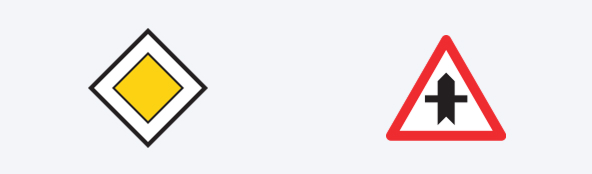
The different types of signs and their meaning are described in the official documentation on
road signs in Switzerland.
Signs indicating that you have priority
Some signs indicate that you have the right of way.
For example:
- Priority road
- Intersection with priority road
In these situations, vehicles coming from other roads must yield to you.
Signs requiring you to yield
Other signs indicate that you must give way to other vehicles.
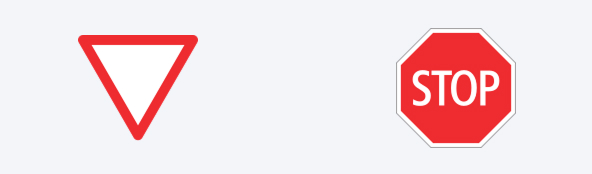
Yield
The yield sign means you must:
- slow down
- check traffic
- give way to vehicles on the priority road
You do not have to stop if the road is clear.
This sign is often accompanied by white triangles painted on the road, sometimes called “shark teeth.”
STOP
The STOP sign requires a complete stop.
Even if no vehicles are coming, you must:
- stop completely
- observe the traffic
- proceed only when the road is clear
These rules are defined in Swiss road traffic legislation:
https://www.fedlex.admin.ch/eli/cc/1962/1364_1409_1420/fr
4. Road markings
Road markings also provide important information at intersections.
For example, white triangles painted on the road indicate that you must yield to traffic on the priority road.
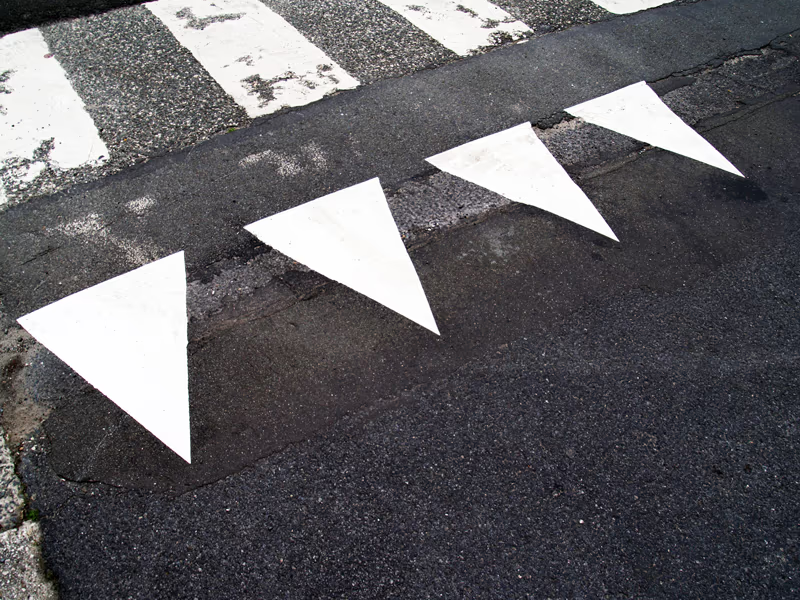
These markings help to:
- reinforce road signs
- make priority rules clearer for drivers
- improve visibility of the rule on the road surface
5. Right-before-left rule
If an intersection has:
- no traffic officer
- no traffic lights
- no priority signs
- no specific road markings
then the general rule applies: right before left.
This means that you must give way to vehicles approaching from your right.

This rule is common in:
- residential areas
- small side streets
- certain urban intersections
How to analyze an intersection in the theory test
During the driving theory exam, it is essential to analyze each situation in the correct order.
Steps to follow:
When observing an intersection, always ask yourself the following questions:
- Is there a traffic officer?
- Are there traffic lights?
- Are there priority road signs?
- Are there road markings?
- If none apply → use the right-before-left rule
Example analysis for the theory test
Example 1: intersection with a traffic officer
Imagine a four-way intersection with a traffic officer directing traffic.
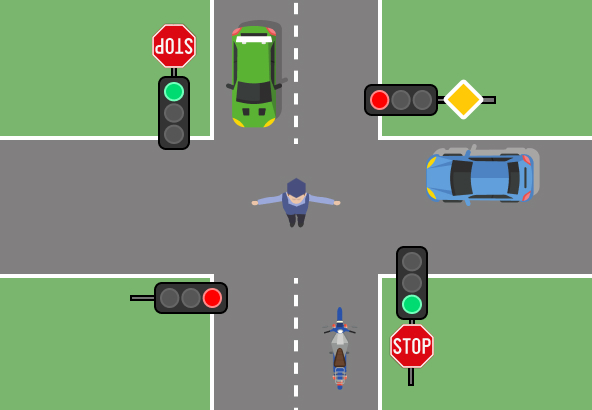
Analysis:
- Is there a traffic officer? → Yes
In this case, traffic lights and signs are ignored.
➡️ You must only follow the officer’s instructions.
Example 2: traffic lights out of order
Now imagine the same intersection without a traffic officer and with traffic lights that are not working.
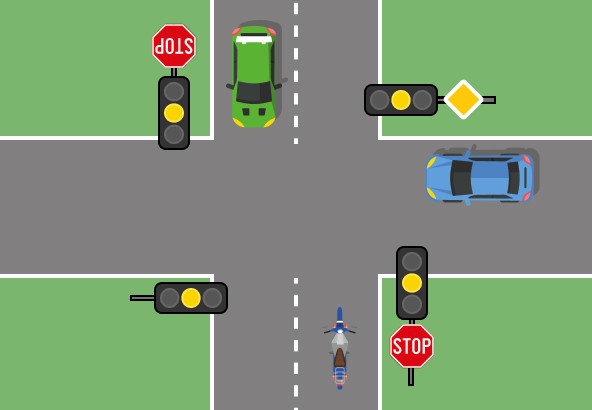
Analysis:
- Traffic officer present? → No
- Traffic lights present? → Yes
- Are they working? → No
- Are there priority signs? → Yes
➡️ In this situation, road signs determine the right of way.
Vehicles encountering a STOP or yield sign must give way to other traffic.
Tip to remember the priority order
To easily remember the order, use this rule:
Officer → Lights → Signs → Markings → Right before left
By analyzing each intersection in this order, it becomes much easier to determine who has the right of way in any traffic situation.